
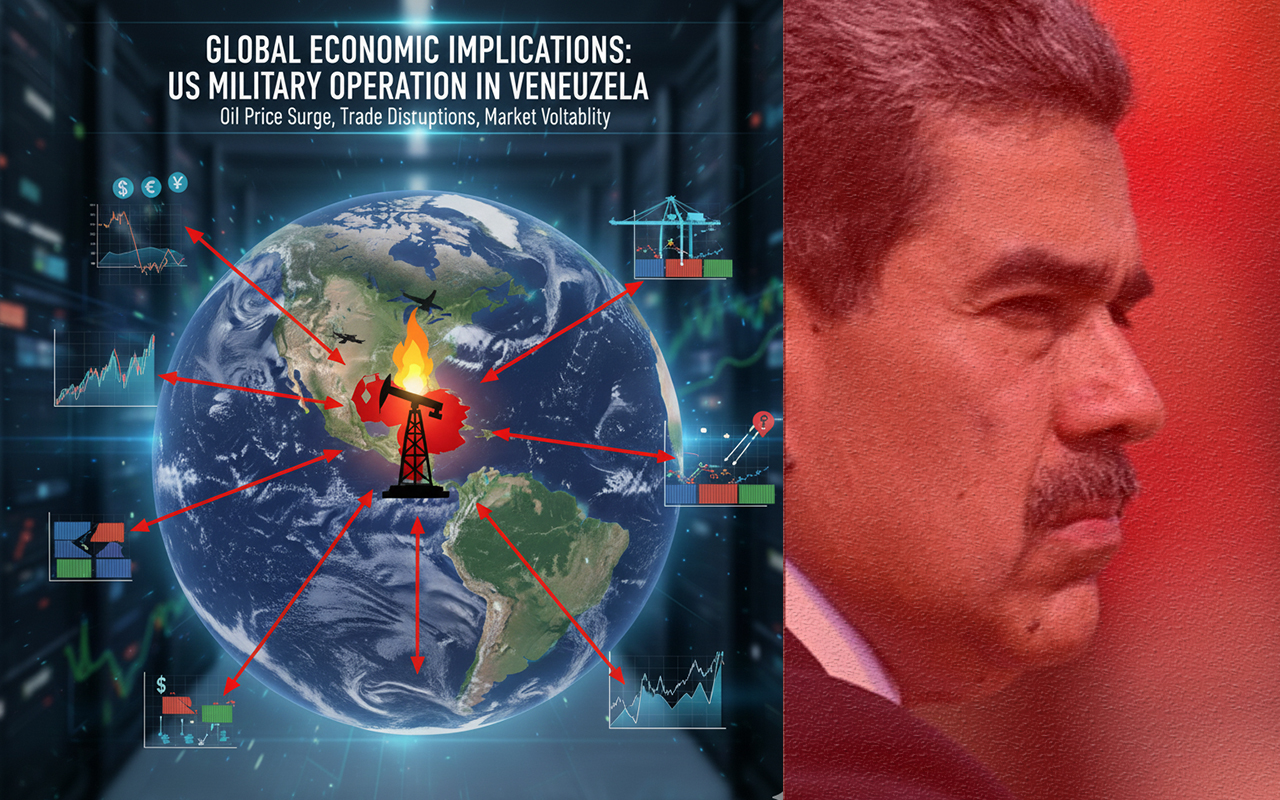
On January 3, 2026, the United States conducted a military operation in Venezuela, resulting in the capture of President Nicolás Maduro and his wife, Cilia Flores. The operation, codenamed “Absolute Resolve,” marks the most significant US intervention in Latin America since the 1989 Panama invasion.
Immediate Market Response
Energy Markets
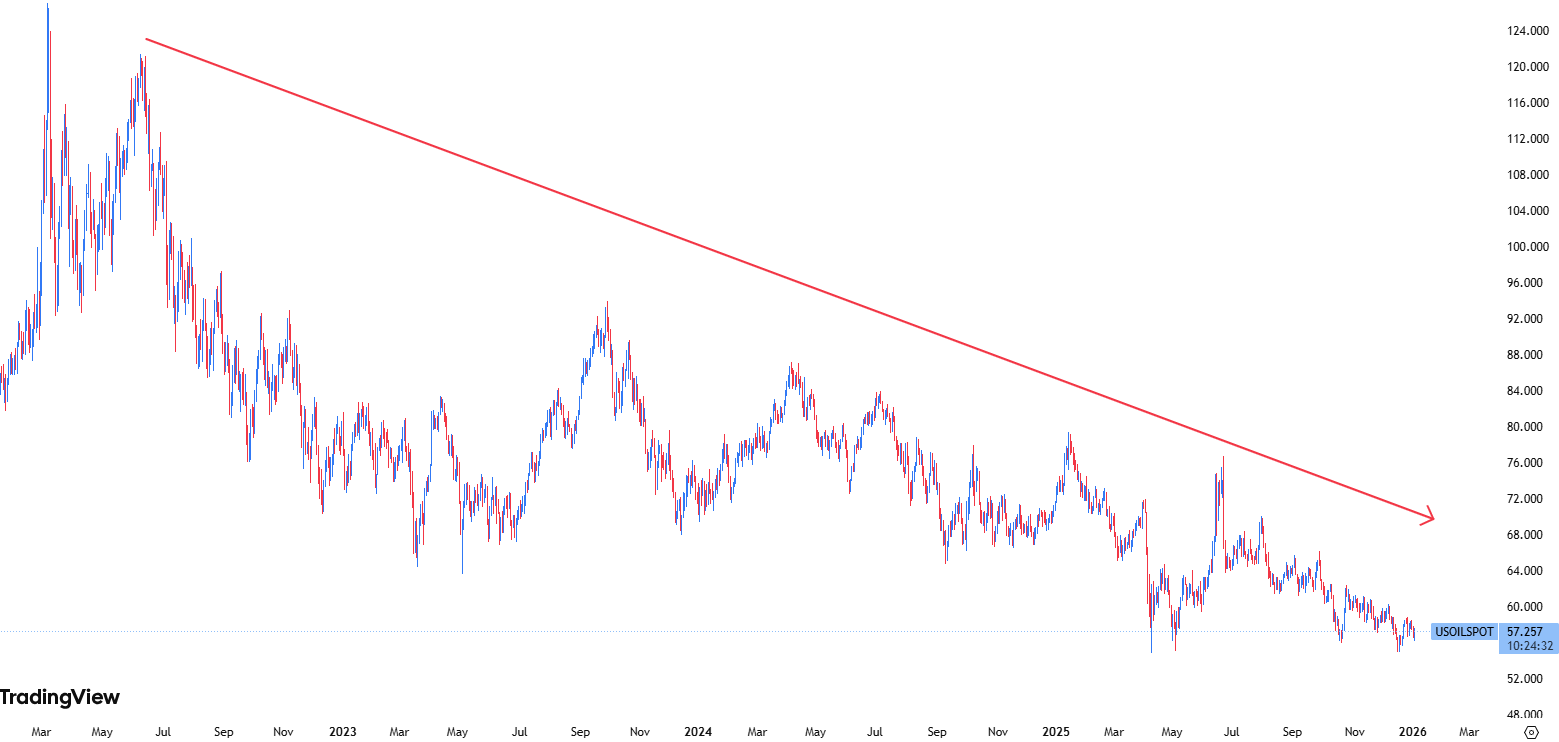
Stock futures remained relatively steady Sunday night as global markets digested the news. Oil markets have shown limited volatility despite initial concerns:
Oil Price Movement:
- US benchmark crude oil traded down 23 cents to $57.09 per barrel, while Brent crude fell 17 cents to $60.58 per barrel
- West Texas Intermediate oil futures have increased approximately 4% since December, when the Trump administration announced Venezuelan tanker seizures, with Brent Crude up 3.5% over two weeks
Why Limited Impact?
Venezuela produces less than 1% of global oil production, and the International Energy Agency forecasts that 2026 global production will exceed demand with a record surplus. The country currently produces approximately 1.1 million barrels daily, significantly below its historical capacity of over 3 million barrels.
Equity Markets
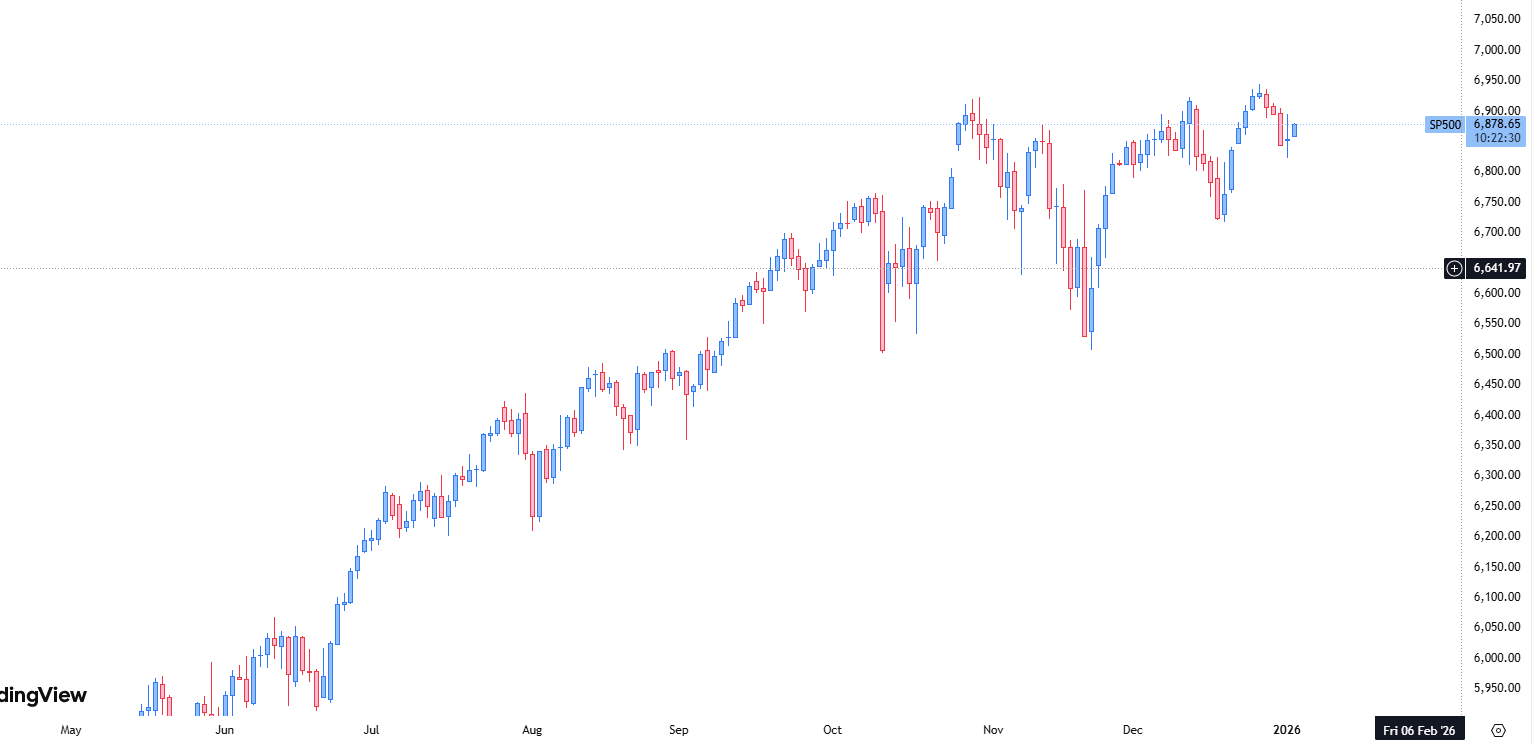
The S&P 500 and Dow Jones closed higher on Friday, while the Nasdaq ended slightly below flatline. Analysts expect muted reactions when markets fully reopen:
Wall Street analysts anticipate relatively little sustained impact, noting investors have weathered numerous geopolitical events in recent years, including Ukraine, Gaza, and Iran, without lasting market disruption.
Regional Economic Impact
Latin America
Refugee Concerns: Colombian President Gustavo Petro deployed security forces along the border, anticipating potential refugee flows. The sudden leadership vacuum raises concerns about humanitarian crises similar to post-intervention scenarios in Iraq and Libya.
Travel Disruption: Hundreds of Caribbean flights were cancelled following the operation, with disruptions expected to continue for days. The FAA initially closed regional airspace but restrictions expired overnight.
Cuba
Cuba, experiencing its worst economic crisis since the Soviet Union’s fall, heavily relies on Venezuelan oil, and any supply disruption could severely worsen the situation.
International Reactions and Economic Implications
Major Powers
China: China’s Foreign Ministry expressed being “deeply shocked,” condemning what it called Washington’s “blatant use of force” against a sovereign state, arguing it threatens peace and security in Latin America.
Russia: Russia’s Foreign Ministry called the action an “unacceptable assault” on Venezuela’s sovereignty if reports of Maduro’s capture prove true, though Moscow has stopped short of forceful challenges.
Brazil: President Lula da Silva condemned the strikes, saying they “crossed an unacceptable line” and evoked “the worst moments of interference” in Latin America.
European Response
European leaders responded cautiously. French President Macron emphasised any transition must be “peaceful, democratic and respectful of the Venezuelan people’s will,” while UK Prime Minister Starmer awaited facts before assessing international law implications.
Long-Term Economic Considerations
Venezuela’s Oil Potential
Venezuela holds approximately 303 billion barrels in proven reserves—about one-fifth of global reserves—but currently produces just 1 million barrels daily. Trump announced that US oil companies would invest billions to rebuild infrastructure.
Investment Challenges:
- Companies won’t commit billions for long-term operations until government terms are clarified, and firms, including Exxon Mobil, still await collection on Venezuelan debt
- Venezuela’s state oil company reports that its infrastructure hasn’t been updated in 50 years, requiring an estimated $58 billion to restore peak production
Analyst Perspectives
Brian Jacobsen of Annexe Wealth Management noted this could “unlock massive quantities of oil reserves over time” and potentially serve as a warning to leadership in Iran and Russia.
However, Helima Croft of RBC Capital Markets called it “an enormous undertaking given the decades-long oil sector decline,” noting the US regime change track record is “not one of unambiguous success”.
Geopolitical Risk Assessment
Economist Marcel Alexandrovich observed that events remind us that geopolitical tensions continue to dominate headlines and drive markets, from trade tensions to those involving Ukraine, Iran, Taiwan, and now Venezuela.
The operation represents a fundamental shift in US Western Hemisphere policy, with President Trump asserting the US would “run” Venezuela temporarily, though Secretary of State Rubio later clarified the US would use leverage rather than direct governance.
Market Outlook
Key Factors to Watch:
- Political Stability: Venezuela’s transition trajectory will determine investment viability and production recovery timelines
- OPEC Response: Venezuela remains an OPEC member despite minimal current production
- Secondary Effects: Potential impacts on diesel prices and inflation due to Venezuela’s heavy crude speciality
- Broader Geopolitics: Implications for US Relations with China, Russia, and regional powers
- Defence Sector: Potential increased spending expectations may benefit defence contractors
Bottom Line for Investors
Despite the dramatic nature of the intervention, immediate economic disruption appears contained. Venezuela’s current minimal production, global oil oversupply, and ample spare capacity limit near-term price shocks. However, uncertainty surrounding the political transition, infrastructure investment requirements, and potential for instability introduces medium-term risks that warrant close monitoring.
The situation underscores the continued importance of geopolitical risk assessment in investment strategies, particularly in energy, defence, and emerging market sectors. Financial markets have largely priced in Venezuelan instability, but the path forward remains highly uncertain and dependent on developments in the coming weeks and months.
For more content, you can check here.
You can follow my social platforms here.
500+ YouTube content. You can subscribe for more live content here.
2200+ Twitter Posting on live proof here.
Follow the Facebook page for updates.