Series: What’s Wrong with Me · Episode 02
Category: Risk Management · Trading Psychology
Read time: ~8 minutes
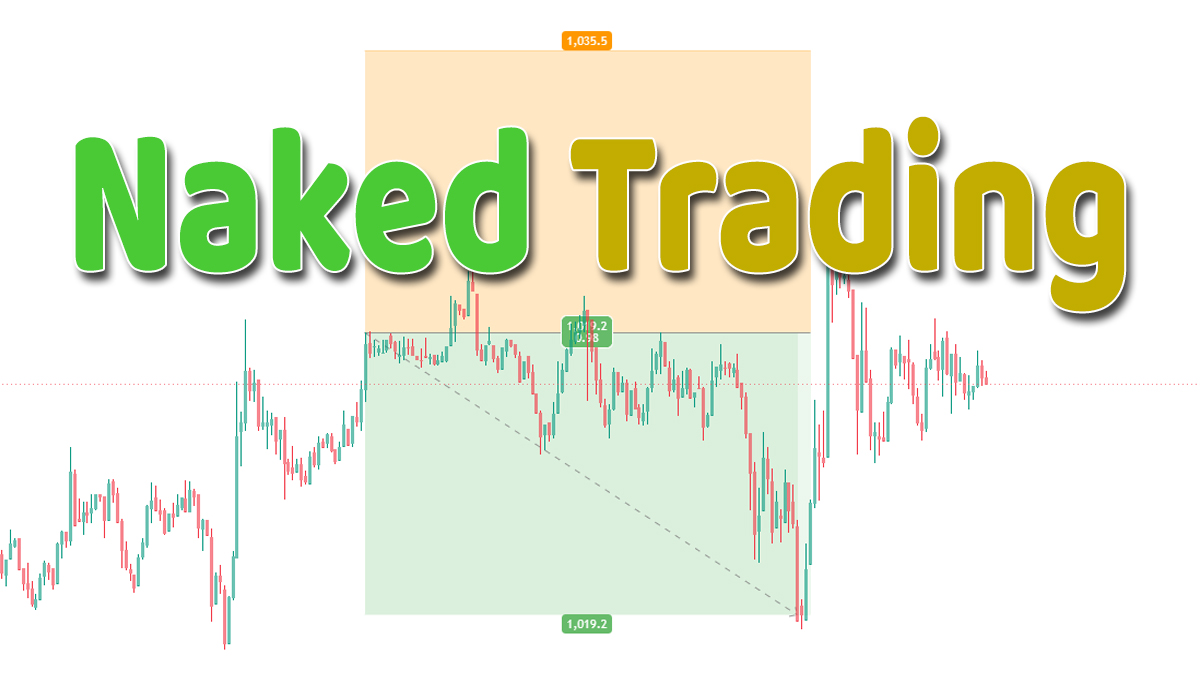
Naked Trading Feels Bold. It’s Actually Just Slow Account Death.
There’s a specific kind of confidence that comes right before you remove your trading stop loss.
You have done your analysis. You have marked your liquidity zones. You have found the order block. The setup looks clean — so clean that putting a stop loss feels almost insulting, like you’re doubting your own read of the chart. Never mind. Lol !!!
So you skip it. “I’ll just watch it manually,” you tell yourself. “I’ll close it if it goes wrong.”
It goes wrong. You don’t close it. You watch instead — frozen, hoping, refreshing the chart every ten seconds — while the trade you were so confident about eats through your account, one pip at a time.
This is naked trading. And if you’ve done it more than once, you already know exactly what I’m describing.
What Is “Naked Trading” — and Why Does It Feel So Tempting?
Naked trading simply means entering a position without a stop loss order attached. No hard exit. No predefined invalidation point. Just you, the chart, and your nerves.
It doesn’t feel reckless in the moment. It feels like trust — trust in your analysis, trust in the setup, trust that “this one is different.”
That feeling is the trap.
A stop loss isn’t a sign of doubt. It’s a sign that you’ve already decided, in advance, exactly what would prove your idea wrong. Removing it doesn’t make your analysis better. It just removes your only exit when the analysis fails.
The Psychology Behind Removing Your Stop Loss
This is the part most traders never examine honestly. Naked trading isn’t really a strategy decision — it’s an emotional one. Here’s what’s actually happening underneath it.
1. Loss phobia in reverse
Normally, loss phobia makes traders exit winning trades too early (we’ll cover that in Episode 05). But with stop losses, it works backward: traders avoid placing a stop because accepting a defined loss feels more painful than an undefined, “it might still come back” loss. A stop loss forces you to admit, on paper, that you might be wrong. Naked trading lets you postpone that admission indefinitely.
2. The illusion of control
Watching the trade manually feels like control. It isn’t. A human reaction time, combined with hope and hesitation, is far slower and far less reliable than a hard order sitting on the exchange. You’re trading the illusion of control for the reality of it.
3. “This setup is too good to fail”
The stronger your conviction, the more tempting it is to skip the stop loss. This is precisely backward. The market does not know how confident you feel. A 90%-confidence SMC setup still fails 10% of the time — and without a stop, that 10% can cost you 100% of your capital instead of 1-2%.
4. Revenge against a previous stop-out
Many traders start naked trading right after a stop loss got hit and price reversed back in their original direction. The frustration of “I would have won if I just held it” quietly convinces them to stop using stops altogether. One bad experience with a stop loss gets generalized into a permanent bad habit — which is a much bigger problem than the one stop-out ever was.
Real Scenario: One Trade Without SL vs. 10 Trades With SL
Let’s make this concrete with numbers, using a ₹1,00,000 account on XAUUSD.
Scenario A — One naked trade
You enter Gold with 0.10 lots and no stop loss, fully confident in the setup. Price moves against you. You hesitate, hoping for a reversal. By the time you finally close it manually, price has moved 300 pips against you.
- Loss: ~$300 (roughly ₹25,000)
- That’s 25% of your account — gone in a single trade.
- Recovery needed: +33% just to get back to break-even.
Scenario B — Ten trades, each with a proper stop loss
You take 10 separate Gold setups, each with a 30-pip stop loss and 1% risk (₹1,000 risk per trade based on the formula from Episode 01).
- Even if all 10 trades hit stop loss (extremely unlikely, but let’s be pessimistic): total loss = ₹10,000 (10% of account)
- Realistically, with a 50% win rate and a 1:2 risk-reward ratio: 5 losers (-₹5,000) and 5 winners (+₹10,000) = +₹5,000 net gain
One naked trade can do more damage than ten properly managed losing trades combined. The stop loss isn’t limiting your potential — it’s what allows you to take enough trades to let your edge actually play out.
Where to Place Stop Loss in SMC/ICT Setups
A lot of traders avoid stop losses because they don’t know where to place them logically — so a stop loss feels arbitrary, and arbitrary things are easy to skip. Here’s how to place it with structure, not guesswork.
For a bullish order block entry: Place your stop loss a few pips below the low of the order block, or below the most recent liquidity sweep low — whichever is lower. This ensures your stop is only hit if the structure that justified your trade is actually invalidated.
For a liquidity sweep + reversal entry: Place your stop just below the wick that swept liquidity. If price takes that low out again, the sweep failed and your trade thesis is wrong — you want to be out, not hoping.
For a Fair Value Gap (FVG) entry: Place your stop below the FVG zone, typically below the candle that created the imbalance. If price closes back through the full gap, the imbalance thesis has failed.
For a CRT (Candle Range Theory) setup: Place your stop beyond the range high or low that defines your setup — the same level that invalidates the range-based reasoning you used to enter.
The common thread: your stop loss should sit exactly at the point where your trading reason becomes wrong. Not a round number. Not “a bit below entry.” The actual structural level that, if broken, tells you the setup has failed.
When you place stops this way, they stop feeling arbitrary — and they become much harder to skip.
How Institutional Traders Use Hard Stops (and So Should You)
There’s a popular myth in retail trading communities that “smart money doesn’t use stop losses, they just have deep pockets.” This is misleading.
Institutions and professional desks absolutely use risk limits — they’re just structured differently than a single retail stop loss order. Professional trading operations work within strict risk mandates: maximum drawdown limits, position size limits, and mandatory exit rules enforced by risk management desks, not personal willpower.
The difference isn’t that institutions trade without risk control. It’s that their risk control is systemized and non-negotiable — enforced by a separate risk desk, not left to the trader’s emotions in the moment.
As a retail trader, you don’t have a risk management department watching over your shoulder. Your stop loss order is your risk desk. It’s the one piece of infrastructure that enforces discipline when your emotions can’t.
Removing it doesn’t make you trade more like an institution. It makes you trade with less risk control than even the most undisciplined prop desk would ever allow.
The Silent Trader Rule on Stop Losses
Every setup we take is built around one non-negotiable rule: the stop loss is placed before the trade is entered, not after.
If you can’t identify a clear structural level to place your stop — order block low, swept liquidity wick, FVG boundary, or range extreme — that’s a signal the setup isn’t clean enough to trade yet. The absence of an obvious stop level is information. It usually means your analysis is still fuzzy.
A stop loss you can defend with structure is a sign your setup is genuinely valid. A setup where you can’t decide where to place a stop is usually a setup you shouldn’t be in.
What to Do Right Now
- Look back at your last 5 trades. How many had a stop loss in place before entry — not added in mid-trade, not “mental” only?
- For any trade where you traded naked, identify the structural level (order block, liquidity sweep, FVG, or range boundary) where your stop should have been.
- Going forward, make it a rule: no entry without a stop loss order placed on the platform — not in your head.
The goal isn’t to never lose. The goal is to make sure every loss is small, defined, and survivable — so your winners have room to outweigh them.
Key Notes
- Naked trading (no stop loss) feels like confidence but is actually the removal of your only defined exit.
- The psychology behind it usually comes from loss aversion, illusion of control, overconfidence, or revenge against a past stop-out.
- One naked trade can cause more damage than ten properly stop-lossed losing trades combined.
- Stop losses should be placed at structural invalidation points: order block lows, swept liquidity wicks, FVG boundaries, or range extremes — not round numbers.
- Institutions use systemized risk control; your stop loss order is the retail equivalent of that risk desk.
- If you can’t find a clear structural stop level, the setup likely isn’t clean enough to trade.
Subham | Silent Trader
For more content, you can check here.
You can follow my social platforms here.
700+ YouTube content. You can subscribe to more live content here.
2200+ Twitter postings on live proof here.
Follow the Facebook page for updates.