
Introduction
The January 2026 U.S. military operation in Venezuela, which resulted in the capture of President Nicolás Maduro, has sent shockwaves through global markets. However, the oil market’s response tells a surprisingly muted story. While the headlines seem dramatic, analysts suggest the immediate impact on global crude prices will be limited—yet the long-term implications for the energy industry could be transformative.
Current Oil Market Conditions: Surprisingly Calm
The Muted Price Reaction
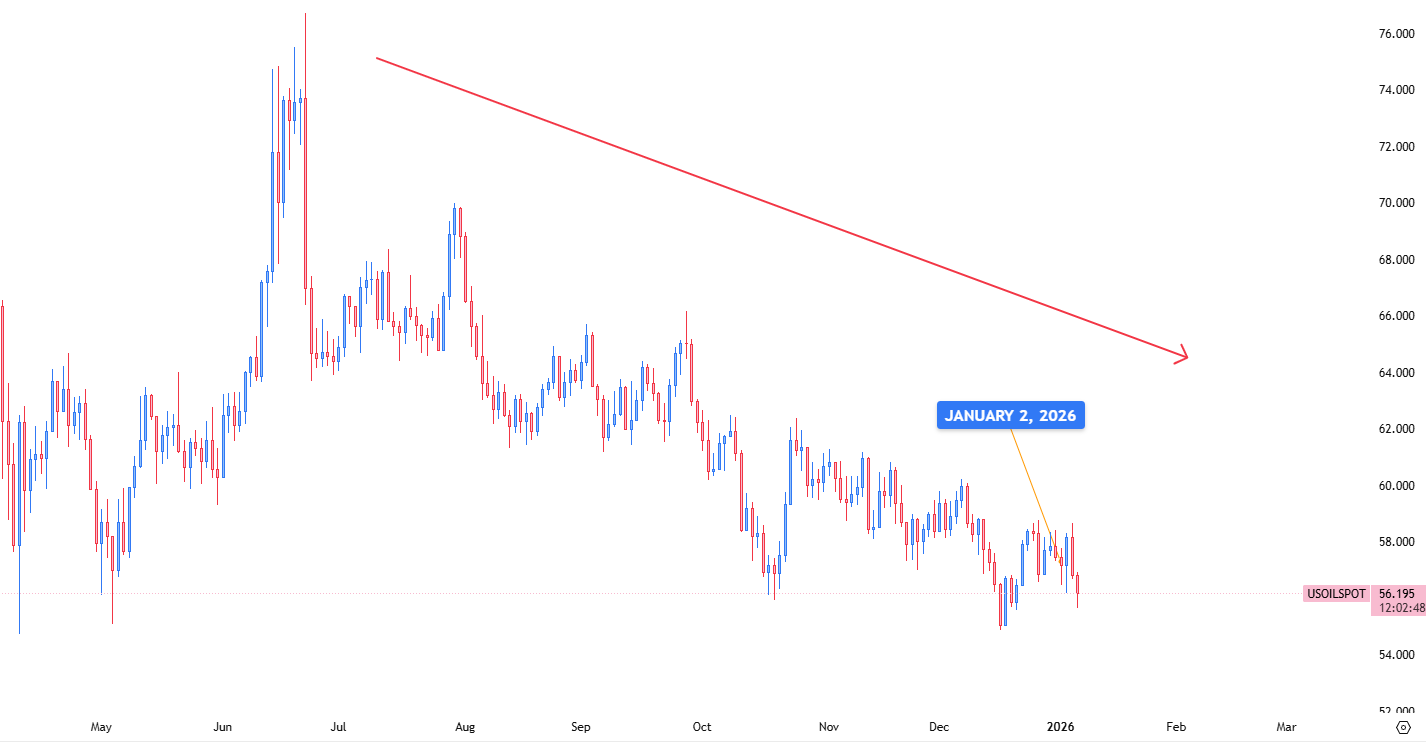
When the Venezuelan incident unfolded over the weekend of January 3-5, 2026, oil markets displayed an unexpected response. Rather than a dramatic spike, crude prices showed modest movement:
Brent crude traded around $60-61.76 per barrel, while West Texas Intermediate (WTI) fluctuated between $57-58.32 per barrel. This measured response reflects a fundamental market reality: global oil is in abundant supply, and Venezuela’s current production is marginal to world output.
Energy analysts point to oversupply concerns as the primary reason for muted price movement. The global market is experiencing what some describe as an “age of abundance,” with new barrels entering from Brazil, Guyana, Argentina, and the United States. OPEC+ has begun unwinding production cuts totaling nearly 4 million barrels per day, while the International Energy Agency projects supply could exceed demand by as much as 2 million barrels daily in 2026.
Why Prices Didn’t Spike
Venezuela currently produces approximately 800,000 barrels per day—less than 1% of global output. While it sits on the world’s largest proven oil reserves at 303 billion barrels (about 17% of global reserves), its actual production capacity is severely diminished. This massive gap between reserves and current output means Venezuela’s production disruption has limited short-term impact on global supply dynamics.
As one leading market analyst noted, despite the geopolitical significance of the event, “there’s still too much oil in the market, and that’s why oil prices will not go ballistic.” Estimates suggest Brent crude might rise by only $1-2 per barrel from the incident alone.
The Blockade and Sanctions Impact
Pre-Existing Disruptions
The oil market had already been adjusting to Venezuela-related supply disruptions before the military operation. The Trump administration’s blockade and seizure of Venezuelan oil tankers in December 2025 had already reduced production by approximately 25%. Recent sanctions and maritime interdiction efforts were gradually shrinking Venezuela’s exports, a factor that markets had partially absorbed.
Continued Constraints
The U.S. embargo on Venezuelan oil remains in place following Maduro’s removal. This ongoing blockade will likely prevent any immediate production increases, keeping exports suppressed in the near term. The geopolitical uncertainty surrounding Venezuela’s transition period adds another layer of supply unpredictability, though not in the direction of dramatic price increases.
Long-Term Market Dynamics: The Trillion-Dollar Question
Infrastructure Challenges and Investment Needs
The real story lies not in today’s oil prices but in tomorrow’s potential. Venezuela’s oil infrastructure has deteriorated significantly over the years of underinvestment and mismanagement. Rebuilding the industry to historic production levels would require approximately $10 billion in annual investment and potentially hundreds of billions of dollars in total capital expenditure.
The oil fields themselves present technical challenges. Venezuela’s reserves are primarily extra-heavy crude concentrated in the Orinoco Belt in the eastern part of the country. This type of oil requires specialised extraction and refining capabilities—the very expertise that international oil companies possess but have been denied access to for years.
Potential Production Expansion
If the Trump administration provides full sanctions relief and an orderly transition of power occurs in Venezuela, the country could potentially add several hundred thousand barrels per day over the next 12 months. Some analysts suggest exports could eventually approach 3 million barrels daily in the medium term if conditions stabilise and foreign investment returns.
At Venezuela’s historical peak in the late 1990s, production reached 3.5 million barrels per day. Chevron, ExxonMobil, and ConocoPhillips—the major U.S. oil companies—are positioned to benefit from rebuilding efforts, though they have shown caution given experiences of asset seizures under the Chávez government.
Market Structure and Timing
Gradual Supply Addition, Not Disruption
Crucially, any expansion of Venezuelan production would add supply to an already oversupplied market. This represents the inverse of the typical geopolitical crisis dynamic. Rather than a supply shock pushing prices higher, the market faces potential additional supply entering a period of weak demand and abundant global inventories.
This structural situation explains why oil investors responded with relative indifference to what would normally be considered a major geopolitical event. The market’s primary concern is not scarcity but surplus.
The Demand Question
A pivotal question shapes the entire Venezuelan calculus: Does the world need significant additional Venezuelan oil? For decades, the energy industry consensus was that oil demand would plateau and decline due to electric vehicle adoption and climate policies. However, recent policy reversals in the U.S., China, and Canada toward cleaner energy initiatives have created uncertainty about demand trajectories.
If global oil demand stabilizes or grows, Venezuelan production could become valuable. If demand continues its secular decline, massive investment in Venezuelan heavy crude becomes less economically attractive, regardless of geopolitical circumstances.
Energy Sector Opportunities
Oil Services and Infrastructure
While crude prices remain stable, other segments of the energy sector have responded more enthusiastically. U.S. oil services companies saw significant stock price increases on prospects of major infrastructure reconstruction projects. Companies specialising in heavy oil extraction and refining stand to benefit substantially from Venezuela’s rebuilding needs.
Legacy Claims and Asset Recovery
ConocoPhillips and ExxonMobil have outstanding arbitration claims against Venezuela totalling approximately $10 billion and $2 billion, respectively, stemming from nationalisation decades ago. Normalising relations could potentially lead to settlements or asset recovery, providing windfalls for these companies.
Chevron, which maintained joint ventures with Venezuela’s state oil company PDVSA and operated under a restricted license, is particularly well-positioned to scale up operations quickly if security conditions stabilize.
Broader Market Implications
OPEC and Global Supply Management
Venezuela’s potential return to significant production adds complexity to OPEC dynamics. As a founding OPEC member, how Venezuela manages production in a reconstructed, U.S.-aligned framework could affect organisation-wide production coordination and market discipline.
Geopolitical Precedent
Beyond oil markets, the Venezuela operation sets a significant geopolitical precedent. The successful military intervention to access natural resources raises questions about international order and energy security that extend well beyond crude prices today.
Refinery Dynamics
Venezuelan heavy crude serves specific refining purposes. It’s essential for producing diesel, asphalt, and industrial fuels—products that lighter crude from the U.S. cannot effectively replace. This technical specialisation means that even modest Venezuelan production additions serve important market functions, particularly when global refining capacity is optimised for various crude types.
Market Outlook for 2026
Near-Term (Next 6 Months)
Expect continued price stability as the Venezuelan transition unfolds. Brent crude likely remains in the $55-65 per barrel range, driven primarily by OPEC+ production decisions and global demand indicators rather than Venezuelan supply considerations. The maritime blockade remains in effect, preventing rapid export increases.
Medium-Term (6-18 Months)
If a stable, U.S.-aligned government consolidates power and begins attracting foreign investment, Venezuelan production could gradually increase. This would add to global supply, potentially exerting downward pressure on prices. Simultaneously, oil services stocks and equipment manufacturers could experience an expansion phase as infrastructure projects ramp up.
Long-Term (18+ Months)
The fundamental viability of massive Venezuelan investment depends on global oil demand assumptions and climate policy trajectories. If the world commits to an energy transition, Venezuelan heavy oil may become stranded despite its vast reserves. If demand remains robust, Venezuela becomes a critical long-term supplier, and the reconstruction becomes strategically significant.
Conclusion
The Venezuela incident of January 2026 represents a watershed moment for the politics of oil, even if oil markets themselves remain relatively unmoved. In an age of global energy abundance, even access to the world’s largest oil reserves fails to disrupt prices dramatically.
However, this calm masks profound longer-term implications. Over the next decade, Venezuelan production could recover substantially, reshaping global energy dynamics. Whether this represents a boon or burden depends entirely on whether the world continues its transition away from fossil fuels or reverses course. For oil market participants, energy investors, and policymakers, Venezuela’s future production capacity remains a critical variable—even if today’s prices suggest otherwise.
For more content, you can check here.
You can follow my social platforms here.
500+ YouTube content. You can subscribe to more live content here.
2200+ Twitter postings on live proof here.
Follow the Facebook page for updates.